World Puppetry Day
Preparing for the global celebration on 21 March

World Puppetry Day 2026
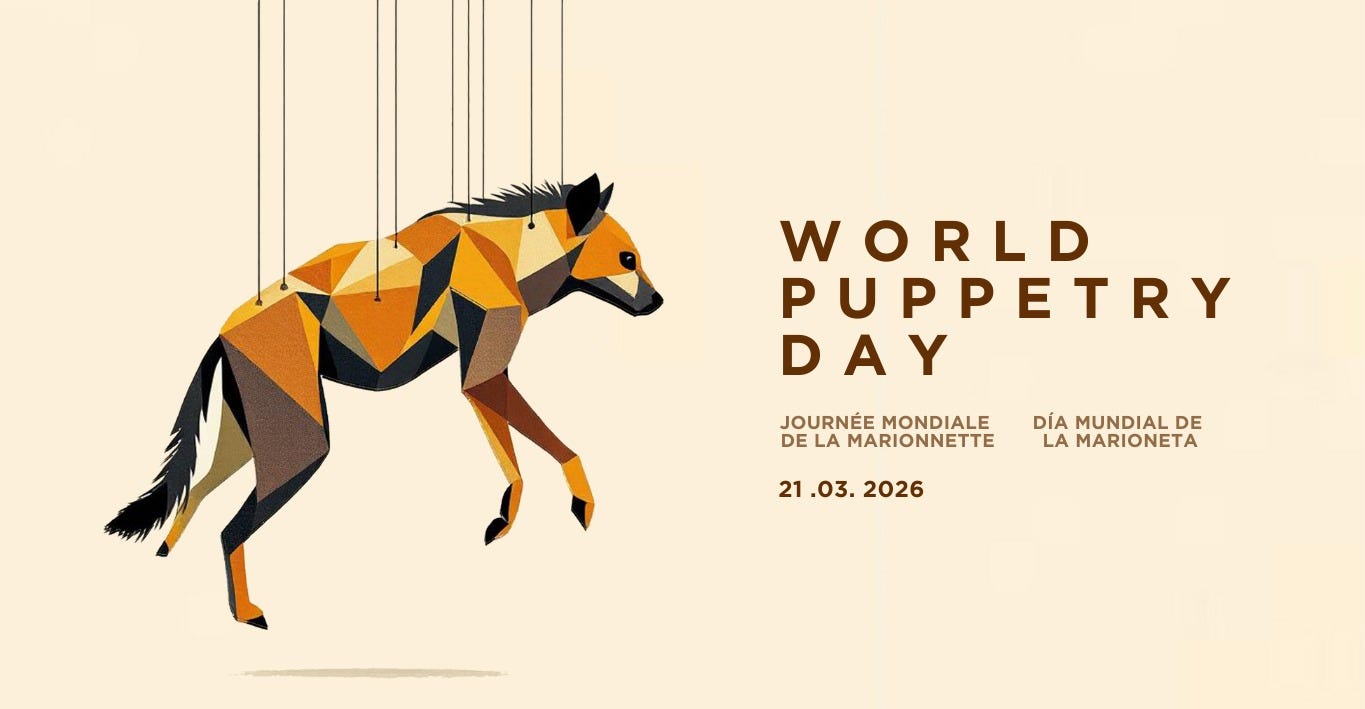
Every year on 21 March, puppeteers, artists, educators, and communities around the world come together to mark World Puppetry Day, an international moment dedicated to the art, traditions, and evolving practices of puppetry.
As March approaches, we’re sharing context and preparation for the day, while saving the official celebration and message for 21 March itself.
What Is World Puppetry Day?
World Puppetry Day was launched in 2003 by UNIMA (Union Internationale de la Marionnette) as a way to promote puppetry arts globally while connecting puppeteers within their own territories.
The day seeks to:
support the safeguarding of puppetry traditions alongside contemporary renewal
recognize puppetry as a tool for ethical, cultural, and aesthetic education
highlight the diversity of puppetry practices across the world
Today, World Puppetry Day is celebrated internationally through UNIMA national centres, members, festivals, and independent artists.
World Puppetry Day 2026
In addition to the annual message and poster, UNIMA International is introducing a new global keynote lecture starting in 2026, broadcast live from its headquarters in Charleville-Mézières, France.
This initiative aims to create a shared international moment of reflection and exchange for the global puppetry community.
Keynote Speaker 2026
Yaya Coulibaly (Mali)
Puppeteer, storyteller, musician and guardian of the Bamanan puppetry tradition.
A direct descendant of Biton Coulibaly, King of Ségou, he inherited extensive knowledge of puppetry traditions connected to initiation rites and community storytelling.
He is the founder of the Sogolon troupe, named after the mother of Emperor Sundiata Keita, and is known internationally for his work preserving and sharing one of Africa’s richest puppetry traditions.
Watch the Keynote Lecture
21 March 2026
15:00 CET / 14:00 UK time
Live from Charleville-Mézières and broadcast worldwide.
The lecture is free and open to everyone.
Watch via the UNIMA YouTube channel.
UNIMA Friendship Café
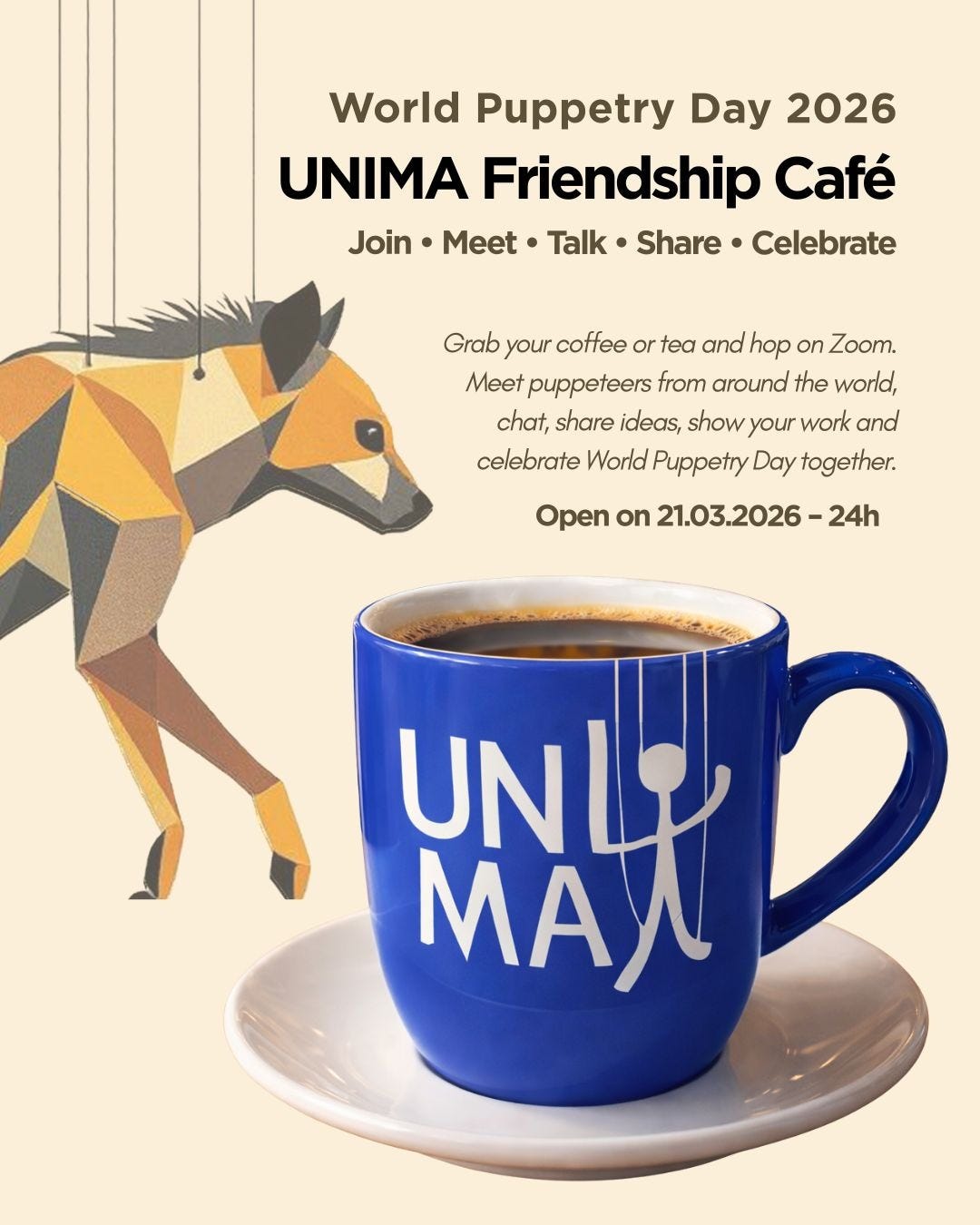
For World Puppetry Day, UNIMA opens a 24-hour online meeting space where puppeteers around the world can connect, share celebrations, and meet colleagues.
📅 21 March 2026
☕ Open for 24 hours
💻 Zoom – drop in anytime
The café will briefly pause during the keynote lecture.
Scheduled Meet-Ups (CET)
09:00–13:00 — UNIMA Hungary Meeting
13:00–14:00 — Happy Hour with the UNIMA Happiness Commission
14:00–15:00 — Fabrizio Montecchi (UNIMA General Secretary)
18:00–19:00 — UNIMA Latin America Commission
🔄 More sessions will be added — check back regularly! To reserve a session, write to: info@unima.org
📎 JOIN THE CAFÉ: Click here for the Zoom link.

Happy Hour
21 March 2026 | 13:00–14:00 CET | Same Zoom link
As part of the Friendship Café, the UNIMA Happiness Commission invites you to a special Happy Hour on the same Zoom link!
Grab your favourite drink, depending on your time zone and bring one object connected to your own happiness.
Together, we’ll raise a glass to World Puppetry Day!
Language: English (but laughter is universal 😄)
Click here for the Zoom link.
The World Puppetry Day Message
Every year a figure from the artistic or cultural world is invited to write the World Puppetry Day message, reflecting on the values and significance of puppetry.
The 2026 message is written by Yaya Coulibaly.
The official message will be released worldwide on 21 March, and will be shared here in alignment with UNIMA.
British UNIMA – World Puppetry Day Events
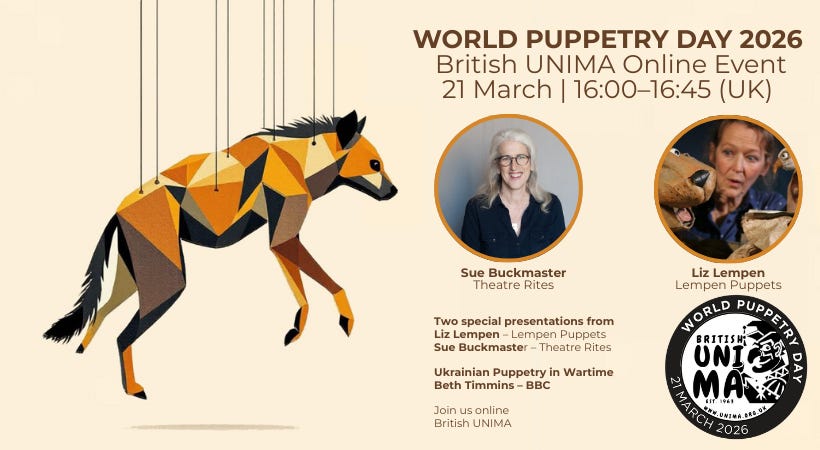
Within British UNIMA, we are hosting and co-hosting a series of online events for World Puppetry Day 2026.
🗓 21 March 2026
🕓 16:00–16:20 (UK time)
Welcome to UNIMA — two special presentations for World Puppetry Day by Liz Lempen (Lempen Puppets) and Sue Buckmaster (Theatre Rites).
🕓 16:20–16:45 (UK time)
Beth Timmins (BBC) will speak about Ukrainian puppetry during wartime, exploring how puppetry continues to support storytelling and cultural expression in difficult circumstances.
Beth Timmins is a doctoral researcher in Anthropology and Archaeology at the University of Oxford, where her DPhil has examined how communities remember conflict through local stories and artistic practice. She previously completed an MSc and BA in Visual Anthropology and Archaeology at Oxford, specialising in oral history and the impacts of looting on cultural heritage. A practising artist, she integrates ethnographic drawing into her research.
You can join these presentations via the button below